Why High Performers Can Still Feel Anxious
Authored and editorially reviewed by Shariq Refai, MD, MBA, board-certified psychiatrist · last reviewed


By Shariq Refai, MD, MBA. board-certified psychiatrist, founder of shrinkMD, and author. This essay is general educational and editorial content. It is not medical advice or psychiatric treatment.
Share this article
Why do high performers feel anxious when they "have everything"?
There's a version of a conversation that comes up across educational and clinical writing about high-functioning adults more often than almost any other. A founder, an executive, a parent, an athlete. They sit across from someone they trust. They say some version of, "I have everything I'm supposed to want. I don't know why I can't enjoy it."
By every external measure, things look good. The career is moving. The relationships are intact. The bills are handled. The body, though, is telling a different story. Waking up at four in the morning with the jaw clenched. Unable to finish a meal without checking a phone three times. Taking a family vacation and spending the whole trip mentally running the numbers on a deal that closed before takeoff. Crying alone in a hotel bathroom because the nervous system never got the memo that it was allowed to land.
The person describing this doesn't say they're anxious. They say they're confused. The math isn't working. Success was supposed to be the answer. It turned out to be fuel.
Does achievement create internal safety?
Here's the wiring that drives the pattern. The brain that organized itself around protection from a particular set of childhood or adolescent threats doesn't update when those threats stop being present. It keeps protecting. The protection takes the form, in adulthood, of preparation, planning, anticipating, and producing.
For a while, that strategy works extraordinarily well. The person who can't relax becomes the person who never misses a deadline. The person who can't stop scanning becomes the person who catches problems before anyone else. The person who can't let go of outcomes becomes the person who lands the big deals. The body that won't settle is the body that builds the career.
Then the career arrives. The deal closes. The promotion comes. The book gets written. The team gets funded. And the body doesn't celebrate. The body finds the next thing to scan for. Because the body wasn't running the strategy in service of any specific goal. The body was running the strategy in service of staying ahead of an old, internal sense of unsafety. The strategy was the protection. The achievements were a side effect. Reaching them doesn't end the protection. It just changes what the protection is pointed at next.
This is why so many high achievers describe success as anticlimactic. The body didn't get the safety it was working for. It got a different threat list.
How does productivity become emotional armor?
For a lot of people in this pattern, productivity isn't only a strategy for output. It's a way of avoiding internal experience. Staying busy means never having to sit with what's underneath the busyness. Producing constantly means never having to feel the unease that arises when production stops.
This is one of the harder things to see from the inside, because the busyness keeps presenting itself as necessary. There's always one more email. One more call. One more thing that has to be done. The person honestly doesn't realize the productivity is doing two jobs. One is the visible work. The other, quieter job is keeping the harder feelings at bay.
The clue is what happens during forced stillness. Vacation. A long weekend. A sick day. People who use productivity as armor often describe those periods as more uncomfortable than the busy ones. The work was hard, but the work was tolerable. Stopping isn't tolerable, because stopping lets the underneath surface. They schedule the vacation, dread it for a week, get to the destination, can't relax, count the days until they can return to email, and arrive home strangely relieved to be working again.
That cycle isn't proof of love for work. It's proof that work is functioning as a regulatory tool. The person isn't choosing it freely. The system has organized itself around it.
Why doesn't the body register achievement as safety?
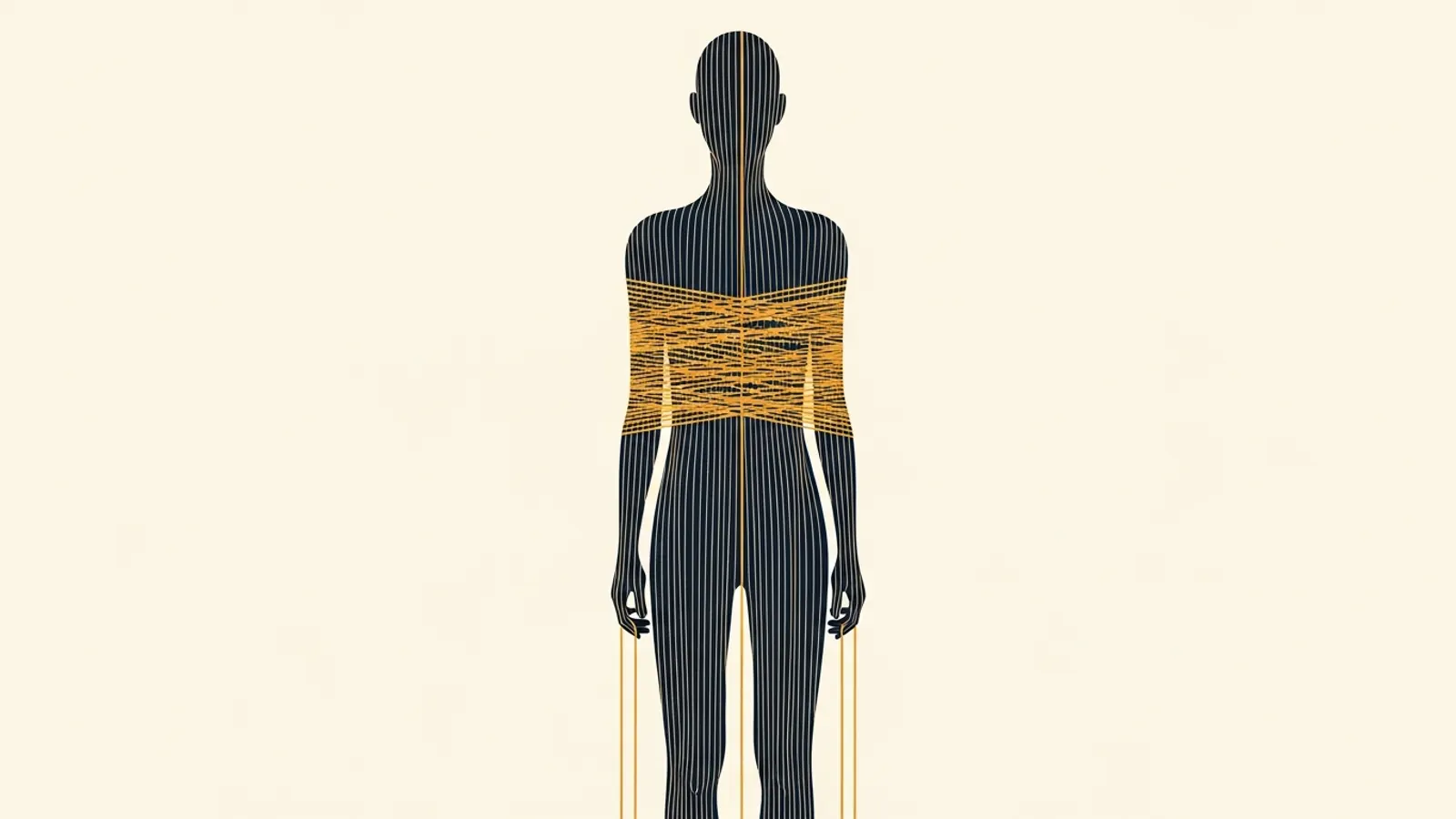
This is the line that lands hardest with high performers when it comes up. The nervous system that's been running activated for two decades doesn't know about the LinkedIn profile. The body doesn't read your CV. The body knows what activation feels like, and it keeps running activation regardless of what the outside picture looks like.
People in this pattern often have a hard time accepting this because they think the achievements should count. They worked hard for them. They earned them. The body should reward them. The body doesn't.
The body rewards perceived safety. Achievements only register as safety if the underlying system has learned to read them that way. For most high performers, the system has learned the opposite. Each achievement raises the stakes. Each promotion expands the territory of what could now be lost. Each book published becomes a new identity to defend. The achievements often increase the load rather than decrease it.
This is uncomfortable to hear. It's also useful information. The work of feeling settled isn't accomplished by piling on more achievement. It's accomplished by retraining the system underneath the achievement. That work is slower, less visible, and often less rewarded. It's also the only work that actually changes the felt experience of being alive.
Why do high performers normalize chronic stress?
One of the most striking patterns in clinical and educational writing about high-functioning adults is how normalized chronic stress becomes. People will describe levels of activation, sleep disruption, and physiological symptoms that would alarm a typical reader, and they describe these things as "fine."
"I only sleep four hours, but I don't really need more." "I have stomach issues all the time, but everyone in finance does." "I'm always wired, but that's just the job." "I haven't taken a real day off in three years, but I love what I do." "My back doesn't ever loosen up, but I sit a lot."
The normalization is part of what makes the pattern so durable. The person isn't ignoring the signals out of weakness. They've calibrated their sense of normal around a level of activation that an outside observer would find concerning. The signals are still happening. The interpretation has shifted.
The body keeps the receipts even when the mind has stopped reading them. Eventually, often in the form of a health event, a marriage crisis, or a major burnout, the receipts present themselves. The mind, suddenly, can read again. By that point, the pattern has run for so long that recovery is slower than it would have been if the signals had been heard earlier.
This is why educational writing about high-functioning anxiety often emphasizes early recognition. The pattern is easier to address while the receipts are still being filed than after they've all come due at once.
What's the difference between motivation and hypervigilance?
This is worth being precise about because they look similar from the outside and feel completely different from the inside.
Motivation feels like fuel. You want to do the thing. The doing is enjoyable in itself, even when it's hard. Energy moves toward it. Finishing feels good. Resting between rounds feels earned and accessible.
Hypervigilance feels like threat avoidance. You have to do the thing. The doing isn't enjoyable. It's required. Energy moves toward it because not doing it feels dangerous. Finishing doesn't feel good. It feels like the temporary absence of pressure before the next pressure arrives. Resting doesn't feel earned. It feels like dropping your guard in a place where dropping your guard isn't safe.
Both produce output. Both look like ambition from the outside. The internal cost is very different. People in motivation tend to have careers that compound over decades with reasonable sustainability. People in hypervigilance tend to have careers that produce extraordinary results for a while and then collapse, often dramatically, when the body finally refuses.
Telling the difference is one of the most useful pieces of self-knowledge a high performer can develop. The clue is how it feels when the work is done. Motivation has space underneath it. Hypervigilance has a new threat waiting.
Why does external success hide internal exhaustion?
The people closest to a high performer often don't see the cost. The performer has trained for years to present functional. The output keeps coming. The calendar keeps getting handled. From the outside, things look fine, sometimes better than fine.
What's invisible is the cumulative load. The body that's been holding the same vigilant posture for years. The sleep that hasn't been real sleep for a long time. The pleasure that's stopped registering. The relationships that have thinned because there hasn't been bandwidth for them. The internal weather that has shifted from "stressed at work" to "stressed as a baseline condition of being alive."
Often, the person experiencing this doesn't see it either. They have nothing to compare it to. They've been running the pattern long enough that they assume it's how their life is supposed to feel. The dissatisfaction underneath gets read as personal failure. They should be happier. They have everything. Something must be wrong with them.
Nothing is wrong with them. They're running a strategy that worked beautifully for output and is exacting a real cost for being a person. The cost was invisible while they were in the middle of accumulating the achievements. It often becomes visible only when the achievements aren't enough anymore.
What does sustainable high performance actually require?
This section is educational and general. It is not a clinical recommendation, and patterns of chronic activation benefit from professional support, not self-management.
The patterns that tend to support sustainable performance, in educational writing and in the careers of people who don't burn out, look quite different from the patterns that produce hypervigilant performance.
Recovery as a real input, not a reward. The body needs recovery to function, the way it needs food and water. Recovery scheduled into the calendar deliberately, treated as load-bearing, rather than fit in around the edges of work.
Disentanglement of identity from output. The work is what the person does. It isn't who they are. People who can hold this distinction tend to be more sustainable, because they can tolerate not producing without feeling that their existence is in question.
Daily nervous system inputs. Small, regular inputs that let the body know it can stand down for a moment. Walks. Slow exhales. Real meals. Conversation. Sleep that's protected rather than negotiated.
Honest relationships with people who can see the cost. Partners, friends, mentors, or clinicians who can say "you're paying for this" before the cost becomes catastrophic.
None of this is a quick fix. The wiring took decades to build. It usually takes years to settle into something different. The work is real. The people who do it tend to look the same on the outside and live very differently on the inside.
When does the high-performer pattern become clinical?
The patterns described above are everyday high-functioning anxiety. The kind that drives careers and quietly costs the people running them. There's a line where this crosses into clinical territory and benefits from professional evaluation.
If anxiety is interfering with sleep, eating, or being present in relationships. If repeated panic attacks are happening. If alcohol, cannabis, prescription stimulants, sedatives like benzodiazepines, or other substances have become tools for managing the load. If mood has dropped or interest in things you used to enjoy has gone with it. Those signals warrant evaluation by a licensed clinician.
Generalized anxiety disorder, panic disorder, depression, ADHD, and substance use disorders all show up regularly in high-performing populations. Evaluation matters because the same surface picture, chronic activation and difficulty resting, can be produced by very different underlying conditions. Each benefits from professional evaluation and individualized care. For clinical care inquiries, please visit shrinkmd.com, the separate clinical telepsychiatry practice. shariqrefai.com is an educational and editorial platform and is not a clinical service. If you're in crisis, call or text 988 in the United States, call 911, or go to your nearest emergency room.
References
- McEwen BS. Stress, adaptation, and disease: allostasis and allostatic load. Annals of the New York Academy of Sciences. 1998.
- Maslach C, Leiter MP. Understanding the burnout experience: recent research and its implications for psychiatry. World Psychiatry. 2016.
- Sapolsky RM. Why Zebras Don't Get Ulcers. Henry Holt and Company. 2004.
- American Psychiatric Association. Generalized anxiety disorder. 2024.
- Juster RP, McEwen BS, Lupien SJ. Allostatic load biomarkers of chronic stress and impact on health and cognition. Neuroscience and Biobehavioral Reviews. 2010.
- Limburg K, Watson HJ, Hagger MS, Egan SJ. Perfectionism and mental health: a meta-analysis. Journal of Clinical Psychology. 2017.
Frequently Asked Questions
- What is high-functioning anxiety?
- It's not a formal diagnosis. It's a descriptive pattern. A nervous system running in chronic activation, channeled into productive output. People who fit it often look successful from the outside and feel exhausted from the inside. They often go years without recognizing the pattern as anxiety because the output keeps getting praised.
- Why are successful people anxious?
- The same wiring that produces sustained high output, careful planning, and attention to detail is the wiring that scans for threat. The anxious system gets channeled into work. The work succeeds. The anxiety doesn't go away, because the work was its expression, not its cure.
- Can achievement actually increase anxiety?
- Often, yes. Achievement raises stakes. It expands the range of things that could now be lost. For a nervous system that's been organized around protecting against loss, more to protect means more to scan, which often means more activation rather than less.
- Why do high achievers overthink?
- The same analytical capacity that drives their performance gets pointed at their inner life. They apply the tool that built the career to questions the tool wasn't built for. The result is endless analysis with diminishing returns.
- Is it possible to be high-performing without being anxious?
- Yes, though the path to that is usually not paved through more achievement. The path tends to involve retraining the underlying system so that performance can come from sustainability rather than threat avoidance. That work is slow and often requires professional support.
- When does this cross into a clinical condition?
- When the pattern interferes with sleep, eating, relationships, or basic functioning. When repeated panic attacks show up. When alcohol or substances become tools for managing the load. When mood drops or interest in things you used to enjoy fades. Those signals warrant evaluation by a licensed clinician.
Related Perspectives
Further Reading
For more on anxiety in adult populations, including the work/relationships/social pattern context, AnxietyResource.org has a topic library: AnxietyResource.org. I serve as its medical editor.
For authoritative background from public health sources, see National Institute of Mental Health: Anxiety Disorders and MedlinePlus: Stress.
About the Author
Shariq Refai, MD, MBA, is a board-certified psychiatrist, founder of shrinkMD, founder of shrinQ, creator of the Unstuck app, author, and mental health educator based in Jacksonville, Florida. shariqrefai.com is an educational and editorial platform featuring books, essays, commentary, and media perspectives. For clinical care inquiries, please visit shrinkmd.com.